



Choosing the right metal fastener for an Australian construction project is far more demanding than it looks. Get it wrong and you risk structural failure, costly rework, or a job that simply won’t pass inspection. Australia’s climate extremes, from tropical cyclones in Queensland to salt-laden coastal air in New South Wales, place unique stress on every connection point. Whether you’re a seasoned builder tackling a commercial steel frame or a DIY enthusiast fitting out a backyard shed, understanding how to match fastener type, material, and load rating to your specific job is the difference between a build that lasts decades and one that fails prematurely.
Table of Contents
- How to evaluate metal fastening solutions
- Top metal fastener types used in Australian construction
- Comparing performance and durability: Which fastener suits your job?
- Expert recommendations for Australian builders and DIYers
- What most guides miss about Australian metal fastening solutions
- Find the right fasteners for your next Australian project
- Frequently asked questions
Key Takeaways
| Point | Details |
|---|---|
| Match fastener to environment | Choosing fasteners suited to Australia’s climate and standards ensures durability and safety. |
| Material impacts performance | Stainless steel excels in harsh conditions, while galvanised steel provides superior strength. |
| Installation quality matters | Proper preparation and method are key to reliable fastening and long-term structural integrity. |
| Expert guidance is crucial | Consulting local specialists and following recommended practices maximises project outcomes. |
How to evaluate metal fastening solutions
Every solid fastening decision starts with four core questions: What load will this connection carry? What environment will it face? What materials are being joined? And how quickly does the installation need to happen? Answering these honestly before you pick up a single bolt or screw will save you time, money, and headaches on site.
Load requirements are the first filter. Static loads, like a shelf bracket or a fence post, behave very differently from dynamic loads, such as those on a roof truss during a storm or a floor joist under foot traffic. Bolt groups analysed elastically per the AS 4100 ICR method for eccentric loads distinguish between snug-tight and friction-grip connections based on whether the load is dynamic or static. Knowing which category your job falls into narrows your options fast.
For load-bearing fasteners in structural applications, compliance with AS 4100 is not optional. It’s the standard that governs steel structures in Australia, and it directly informs which bolt grade and connection type you need. Skipping this step is how mistakes happen on commercial sites.
Environment is the second critical filter. Coastal zones, industrial sites, and fire-prone bushland all demand different corrosion and heat resistance. A fastener that performs brilliantly in a dry inland shed may corrode within months near the ocean. Understanding your fastener gauge guide and material compatibility is just as important as the load calculation.
Here’s a quick checklist to run through before selecting any metal fastener:
- Load type: Static, dynamic, or shear?
- Material compatibility: Will the fastener react with the substrate or adjacent metals?
- Environmental exposure: Coastal, industrial, fire-prone, or sheltered?
- Installation method: Hand tool, pneumatic, or power driver?
- Regulatory compliance: Does the application require AS 4100 or other Australian standards?
Pro Tip: Always double-check material compatibility before installation. Mixing stainless steel fasteners with aluminium substrates, for example, can trigger galvanic corrosion that silently weakens the joint over time.
Taking ten minutes to work through these criteria before you order saves hours of rework later. The best builders treat fastener selection as part of the design process, not an afterthought.
Top metal fastener types used in Australian construction
Armed with evaluation criteria, let’s explore the fasteners available and their distinctive properties. Australian construction draws on a wide range of metal fasteners, and each type has a specific role where it genuinely excels.
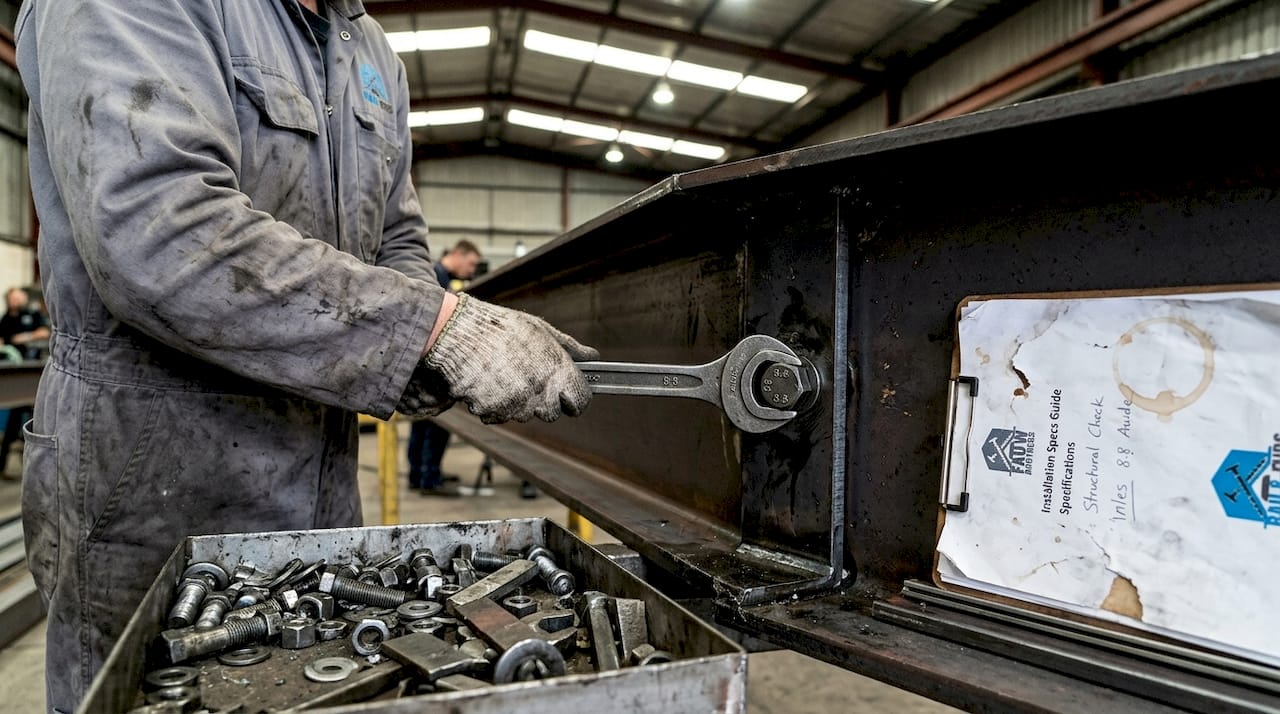
Bolts and nuts are the workhorses of structural steel. High-strength structural bolts, particularly Grade 8.8, are the standard for steel-to-steel connections in commercial and industrial builds. They offer predictable load ratings and are straightforward to inspect and replace if needed.
Screws cover an enormous range of applications. Self-drilling screws cut their own hole as they drive in, making them fast and efficient for light steel framing and roofing. Self-tapping screws require a pre-drilled pilot hole but deliver a tighter, more precise thread engagement. Fastener performance research confirms that self-drilling is faster but less precise than self-tapping, which matters when tolerances are tight. For high-precision joins, self-tapping wins every time.
Staples are underrated in construction. They’re ideal for quick, light-duty joins in timber framing, insulation batts, and house wrap. Pneumatic staplers make the job fast, and when load requirements are modest, staples are both cost-effective and reliable.
Specialty nails, including hardened steel nails, are purpose-built for demanding substrates like concrete and masonry. Hardened steel nails driven by a powder-actuated tool can anchor timber sole plates to concrete slabs quickly and securely, a task that would be painfully slow with traditional methods.
Material choice cuts across all these types. Stainless steel has lower initial tensile strength than galvanised high-tensile steel but offers superior retention in fire and harsh conditions. Galvanised steel is the budget-friendly choice for most sheltered applications, but it has real limits in aggressive environments.
Key fastener types and their best uses:
- Structural bolts (Grade 8.8): Steel framing, heavy connections
- Self-drilling screws: Light steel framing, roofing sheets
- Self-tapping screws: Precision joins, thicker gauge steel
- Pneumatic staples: Timber framing, insulation, house wrap
- Hardened steel nails: Concrete and masonry anchoring
- Stainless steel screws: Coastal, fire-prone, and outdoor applications
Pro Tip: For any project within two kilometres of the coast or in a designated bushfire attack level zone, always specify stainless steel or hot-dipped galvanised fasteners. The upfront cost difference is minor compared to the expense of corrosion-related failures.
Check the fastener installation tips for guidance on correct torque settings and installation sequences for each fastener type.
Comparing performance and durability: Which fastener suits your job?
To help you choose, here’s a clear comparison of how the most common fasteners perform in Australian conditions. The key trade-offs come down to three dimensions: load capacity, corrosion resistance, and installation speed.
Stainless steel has better retention under adverse conditions than galvanised high-tensile steel, even though its initial tensile strength is lower. This means stainless is the smarter long-term choice in coastal, industrial, and fire-exposed environments, even if galvanised looks stronger on the data sheet.
“Always match fastener to the job’s environmental stress. A fastener that’s over-specified for load but under-specified for corrosion is a liability, not an asset.”
For concrete nails performance in masonry applications, hardened steel consistently outperforms standard bright nails, offering far greater shear resistance in dense substrates.
| Fastener type | Load capacity | Corrosion resistance | Installation speed | Best environment |
|---|---|---|---|---|
| Structural bolt (Grade 8.8) | Very high | Moderate (galvanised) | Slow | Sheltered steel frames |
| Stainless steel screw | Moderate | Excellent | Fast | Coastal, fire-prone |
| Galvanised nail | Moderate | Good | Very fast | General construction |
| Self-drilling screw | Moderate | Good to excellent | Very fast | Light steel, roofing |
| Hardened steel nail | High | Moderate | Fast (pneumatic) | Concrete, masonry |
| Pneumatic staple | Low to moderate | Moderate | Fastest | Timber, insulation |
When troubleshooting fastening failures on site, the cause is almost always a mismatch between fastener specification and environmental stress. The table above makes those mismatches visible before they happen.
The practical takeaway: don’t let installation speed drive your fastener choice in demanding environments. A job done fast with the wrong fastener will cost far more to fix than one done right the first time.
Expert recommendations for Australian builders and DIYers
With performance details laid out, let’s focus on practical choices and proven picks for different Australian jobs. The right fastener for a Queensland cyclone zone is not the same as the right fastener for a Melbourne inner-city renovation, and experience makes that distinction clear.
For timber framing, ring-shank nails or structural screws provide the best withdrawal resistance. Pneumatic framing nailers loaded with hot-dipped galvanised nails are the industry standard for speed and reliability.
For steel framing and steelwork, Grade 8.8 structural bolts remain the benchmark. Snug-tight vs friction-grip connections, analysed elastically for demanding loads, determine whether your connection can handle dynamic forces like wind uplift or seismic movement.
For roofing, corrugated fasteners designed specifically for metal roofing sheets deliver the sealing and holding power that standard screws can’t match. In coastal areas, stainless steel roofing screws are non-negotiable. Metal roofing in commercial applications benefits from specialist roofing insights that account for thermal movement and wind uplift.
For concrete and masonry, hardened steel nails driven pneumatically or powder-actuated anchors are the fastest and most reliable options for fixing timber plates and brackets to slabs.
Installation preparation checklist:
- Confirm fastener grade and material match the specification
- Check tool calibration and driver bit condition
- Pre-drill pilot holes where required (self-tapping screws)
- Apply thread sealant where water ingress is a risk
- Torque structural bolts to the manufacturer’s specification
| Application | Recommended fastener | Material | Key reason |
|---|---|---|---|
| Timber framing | Ring-shank nail | Hot-dipped galvanised | Withdrawal resistance |
| Steel framing | Grade 8.8 bolt | Galvanised or HDG | Load rating compliance |
| Metal roofing | Corrugated/roofing screw | Stainless steel | Corrosion and seal |
| Concrete anchoring | Hardened nail/anchor | Hardened steel | Shear and pullout strength |
| Coastal outdoor | Structural screw | Stainless steel | Corrosion resistance |
What most guides miss about Australian metal fastening solutions
Most fastener guides focus almost entirely on load ratings and material grades, which are important but only part of the picture. What they consistently skip is the compounding effect of Australia’s environmental extremes on fastener performance over time.
Fire, salt spray, and cyclone-resilience are not edge cases in Australia. They are everyday realities for builders in Queensland, Western Australia, and coastal New South Wales. A fastener that meets the minimum load specification but isn’t rated for prolonged salt exposure will fail silently, often years before anyone notices.
Compliance with Australian fastener standards is the floor, not the ceiling. Experienced builders treat it as the starting point and then layer on environmental and project-specific requirements. Following fastener installation expert advice that accounts for real Australian conditions, not just textbook load tables, is what separates a build that lasts from one that becomes a liability.
The uncomfortable truth is that under-specifying fasteners to save a few dollars per connection is one of the most common and most expensive mistakes made on Australian job sites.
Find the right fasteners for your next Australian project
Selecting the right metal fasteners doesn’t have to be complicated when you have access to the right products and expert support. At Aussie Nails and Fasteners Warehouse, we stock everything from structural bolts and corrugated fasteners to specialised roofing screws and pneumatic nails, all sourced from trusted brands including JITOOL, APlus, and Supco.
Browse our full range of fastener tools online, or explore the complete full fastener range to find exactly what your next project demands. Whether you’re a professional builder working to tight specifications or a DIY enthusiast tackling a weekend project, we make it easy to order quality fasteners at competitive prices, delivered across Australia.
Frequently asked questions
What are the key factors when choosing metal fasteners for Australian construction?
Prioritise load requirements, corrosion resistance, and compliance with AS 4100 standards for eccentric and dynamic loads. Environmental exposure, particularly coastal or fire-prone conditions, should always influence your final choice.
Should I use galvanised or stainless steel fasteners outdoors?
Galvanised steel offers high initial tensile strength, but stainless steel retains better performance in fire-prone or corrosive environments. For coastal or bushfire-exposed outdoor applications, stainless steel is the stronger long-term investment.
How do self-drilling and self-tapping screws differ?
Self-drilling screws drive in without a pilot hole, making them faster on site, while self-tapping screws require pre-drilling but deliver a more precise, secure thread engagement. Choose based on whether speed or precision matters more for your application.
What is the recommended fastener for corrugated roofing in coastal areas?
Stainless steel roofing screws are the best choice for coastal corrugated roofing because stainless outperforms galvanised in sustained salt-spray and moisture exposure. They cost slightly more upfront but significantly outlast galvanised alternatives in these conditions.
Where can I buy quality metal fasteners in Australia?
Aussie Nails and Fasteners Warehouse offers one of the widest ranges of quality fasteners and tools available online in Australia, with options suited to both professional builders and DIY enthusiasts nationwide.
Recommended
- Fastener installation guide: expert tips for Australian projects – Aussie Nails and Fasteners Warehouse
- Load-bearing fasteners guide for Australian construction – Aussie Nails and Fasteners Warehouse
- CORRUGATED FASTENERS Electro Galvanised 10MM – Aussie Nails and Fasteners Warehouse
- CORRUGATED FASTENERS Electro Galvanised 13MM – Aussie Nails and Fasteners Warehouse
- Structural engineering trends 2026: innovations you need – BIM.Supply
- Protective Coating Trends 2025: Innovations for Infrastructure