



TL;DR:
- Australian fasteners must meet strict standards to prevent corrosion and structural failure.
- Correct fastener selection depends on material, environment, and specific project standards.
- Proper installation and supervision are vital to ensure long-term safety and compliance.
Choosing the right fastener for an Australian construction or DIY project is far more demanding than it looks. Australia’s extreme coastal salt air, tropical humidity, and strict building codes mean that a fastener perfect for a European or American project can fail badly here. Get it wrong and you’re looking at corrosion, structural failure, or a job that simply won’t pass inspection. Get it right and your build stands strong for decades. This guide walks you through every major fastener category, the standards that matter in Australia, and the practical knowledge to make confident choices every time.
Table of Contents
- Understanding fastener categories and their applications
- Bolts, screws, and nails: The backbone of Aussie builds
- Anchors, rivets, pins, and specialty fasteners for unique challenges
- Materials, coatings, and durability: Picking fasteners that last in Australia
- Common failure modes and best practices for fastener installation
- Why Australian fastener selection is more than just picking from a list
- Get quality fasteners, tools, and advice for your next Australian project
- Frequently asked questions
Key Takeaways
| Point | Details |
|---|---|
| Match fastener to material | Using the correct type and grade for timber, metal, or concrete ensures lasting strength and compliance. |
| Follow Australian standards | Local codes like AS/NZS and AS 5216 are crucial for building safety and avoiding costly failures. |
| Choose materials for climate | Select stainless or high-grade coatings for coastal projects to minimise corrosion and maximise durability. |
| Avoid common installation mistakes | Proper tensioning, torque, and supervision prevent loosening and structural failures. |
| Source fasteners from trusted suppliers | Quality suppliers offer compliant products, support, and recommendations tailored to Australian conditions. |
Understanding fastener categories and their applications
Before you reach for the first packet on the shelf, it helps to know what you’re actually choosing between. Main types of fasteners for construction include bolts, screws, nails, nuts, washers, rivets, anchors, and pins/dowels, and each one serves a distinct purpose.
Bolts are threaded fasteners designed to work with a nut, creating a clamped joint. They’re the go-to for structural steel connections and anywhere you need a removable, high-strength fix. Screws are self-threading and drive directly into the material, making them incredibly versatile across timber, metal, and sheet materials. Nails are the quickest option for timber framing and cladding, relying on friction and shear strength rather than thread engagement.
Nuts and washers work alongside bolts to distribute load and prevent loosening. Rivets create permanent joints in sheet metal, roofing, and ductwork without needing access to the back of the material. Anchors are engineered specifically for concrete and masonry, while pins and dowels align and connect timber, masonry, or concrete elements with precision.
Here’s a quick breakdown of common Australian use cases:
- Bolts: Structural steel frames, decking, pergola posts
- Screws: Timber framing, cladding, cabinetry, metal roofing
- Nails: Wall framing, flooring, fencing, formwork
- Rivets: Guttering, sheet metal roofing, HVAC ducts
- Anchors: Concrete slabs, brick walls, masonry balustrades
- Pins/dowels: Timber joints, precast concrete panels
Matching the fastener to the base material is non-negotiable. Driving a standard wood screw into masonry, or using a mild steel bolt in a coastal environment, are the kinds of mistakes that create expensive problems down the track. For timber-specific projects, understanding woodworking fastener types can save you considerable rework. Similarly, for steel and aluminium work, exploring metal fastening solutions will point you toward the right products from the start.
Pro Tip: Always check whether your fastener meets fastener quality standards before purchasing in bulk. A cheap fastener that fails mid-project costs far more than a quality one installed correctly.
Bolts, screws, and nails: The backbone of Aussie builds
These three fastener types cover the vast majority of Australian construction and renovation work, so it’s worth understanding them in real depth.
Bolts come in several common forms. Hex bolts are the standard choice for structural steel, while carriage bolts have a smooth, domed head suited to timber connections where a flush finish matters. For structural applications in Australia, grade 8.8 and above is required under AS 1110/1111 and AS/NZS 1252 compliance. Grades run from 4.6 (general purpose) up to 12.9 (high tensile), and using the wrong grade in a structural joint is a serious safety risk.
Screws are equally varied. Machine screws are threaded for use with nuts or tapped holes, while wood screws have a coarser thread designed to grip timber fibres. Self-tapping screws cut their own thread as they’re driven in, making them ideal for sheet metal roofing and light steel framing. For a practical breakdown of sizing, the fastener gauge guide is a useful reference.
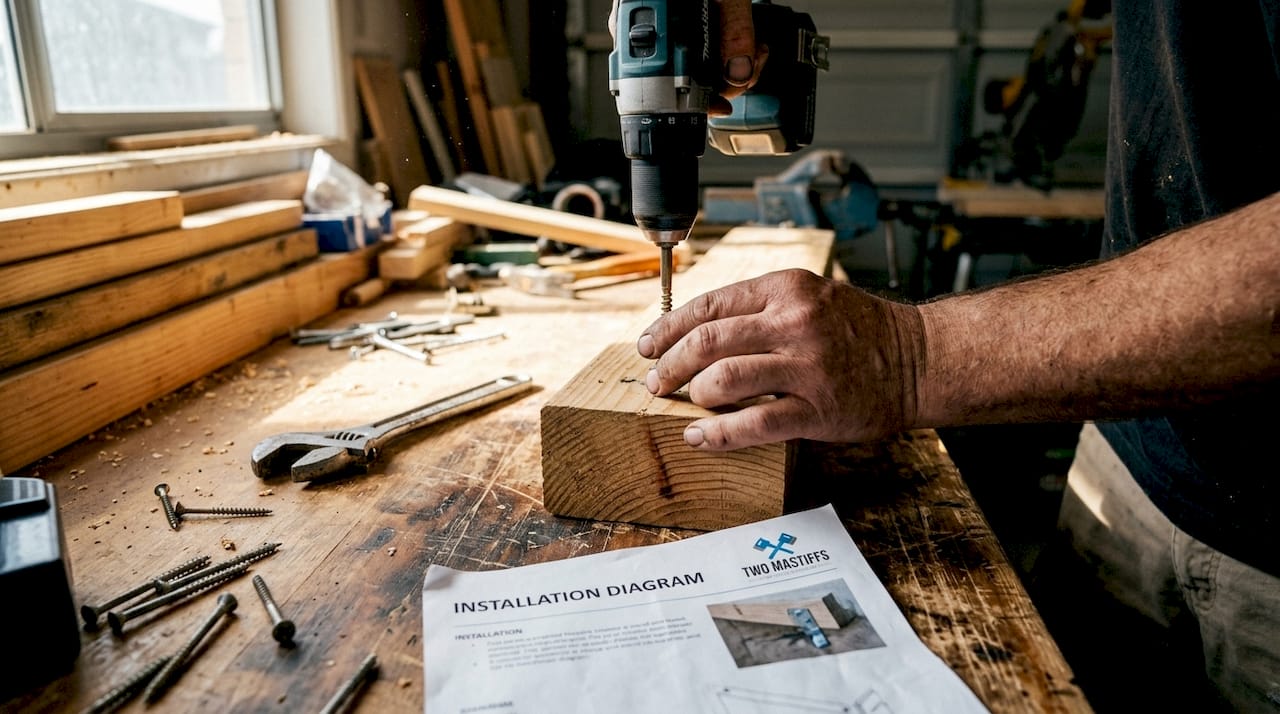
Nails are often underestimated. Ring shank nails have annular ridges along the shank that dramatically increase pull-out resistance, making them the preferred choice for structural flooring and cladding. Common smooth shank nails are faster to drive but offer less holding power. For any load-bearing fastener application, ring shank is the smarter option.
| Fastener | Best use | Key standard | Grade/type |
|---|---|---|---|
| Hex bolt | Structural steel | AS/NZS 1252 | Grade 8.8+ |
| Carriage bolt | Timber connections | AS 1110 | Grade 4.6/8.8 |
| Self-tapping screw | Sheet metal, roofing | AS 3566 | Class 3/4 |
| Ring shank nail | Flooring, cladding | AS 2334 | Galvanised |
| Wood screw | General timber | AS 1476 | Stainless/galv |
Pro Tip: Never mix bolt grades in the same joint. A single lower-grade bolt in a high-tensile connection becomes the weakest link and can cause progressive failure under load. Follow fastener installation tips to keep every connection consistent.
Anchors, rivets, pins, and specialty fasteners for unique challenges
Some projects demand fasteners that go well beyond bolts and screws. Anchors, rivets, and specialty options solve problems that standard fasteners simply can’t.
Anchors fall into two broad categories. Post-installed anchors are set into hardened concrete after drilling, while cast-in anchors are embedded during the pour. Both types are governed by AS 5216, which covers design for tensile and shear loading in concrete fastenings. This standard is critical for balustrades, structural brackets, and any anchor point subject to live loads.
Expansion anchors work by wedging outward against the drilled hole as the bolt is tightened, creating a mechanical grip in concrete or masonry. Chemical anchors use an epoxy or resin compound to bond a threaded rod into the substrate, offering superior load capacity in cracked or low-strength concrete.
Rivets create a permanent, vibration-resistant joint without needing rear access. They’re widely used in roofing, guttering, and HVAC ductwork across Australia. Blind rivets (also called pop rivets) are the most common type on site.
Pins and dowels are used to align precast concrete panels, connect timber members, and reinforce masonry. Hardened steel pins can be driven directly into concrete with a powder-actuated tool, making them fast and reliable for formwork and structural connections.
Here’s a summary of specialty fastener applications:
| Fastener type | Substrate | Typical use | Key standard |
|---|---|---|---|
| Post-installed anchor | Concrete | Structural brackets | AS 5216 |
| Cast-in anchor | Concrete | Balustrades, columns | AS 5216 |
| Blind rivet | Sheet metal | Roofing, guttering | AS 1167 |
| Chemical anchor | Cracked concrete | High-load connections | AS 5216 |
| Hardened pin | Concrete/masonry | Formwork, framing | AS 3569 |
For any anchor in a structural or public-access application, always request test data from the manufacturer confirming compliance with AS 5216 load ratings. Generic anchors without certified data are a liability on any regulated build.
For long-term performance in these demanding applications, the fastener durability guide covers material and coating choices that keep specialty fasteners performing for years.
Materials, coatings, and durability: Picking fasteners that last in Australia
Choosing the right fastener type is only half the job. The material and coating determine how long it actually lasts in Australian conditions.
Carbon and alloy steel fasteners cover grades 4.6 through 12.9, with higher numbers indicating greater tensile strength. They’re the workhorse of construction but need protective coatings in any exposed or wet environment.
Stainless steel is where Australian conditions really separate the options:
- Grade 304 suits general outdoor and light industrial use, offering good corrosion resistance in urban and rural environments
- Grade 316 adds molybdenum, making it the Tier 1 choice for coastal zones within one kilometre of the ocean, where salt spray is relentless
Coatings extend the life of steel fasteners significantly:
- Class 3 zinc coating suits general outdoor exposure and is the minimum for most Australian exterior applications
- Class 4 zinc coating is rated for 1000+ hours of salt spray testing, making it appropriate for severe marine environments
- Hot-dip galvanising to AS/NZS 1214 provides the thickest zinc layer and the longest service life for structural fasteners in aggressive environments
A useful rule: if you’re building within sight of the ocean, use 316 stainless or hot-dip galvanised fasteners as a minimum. For inland and urban projects, Class 3 zinc or 304 stainless is usually sufficient.
Practical durability tips for Australian projects:
- Never mix stainless and mild steel in the same joint; galvanic corrosion will attack the mild steel rapidly
- In tropical Queensland or the Northern Territory, prioritise coated or stainless fasteners even for interior framing exposed to humidity
- Check the fastener durability advice for climate-specific guidance before purchasing
- For home renovation projects, home improvement fasteners covers practical material choices for every room and exterior application
Common failure modes and best practices for fastener installation
Even a correctly specified fastener can fail if it’s installed poorly. Understanding how failures happen is the fastest way to avoid them.
Fastener failure modes include corrosion, loosening, fatigue, stripping, and improper tensioning. Each one has a distinct cause and a clear prevention strategy.
The most common installation mistakes on Australian sites:
- Under-tensioning structural bolts: High-strength bolts under AS/NZS 1252 require full tensioning, not just hand-tight. Under-tensioned bolts allow slip and fatigue cracking under dynamic loads.
- Over-tightening screws: Driving screws past the point of flush strips the thread and destroys holding power, especially in softwood or sheet metal.
- Using the wrong drill bit: Anchors drilled with a worn or incorrect bit create an oversized hole, reducing load capacity dramatically.
- Ignoring edge distance: Placing anchors or bolts too close to a concrete edge causes spalling and premature failure under load.
- Skipping thread lubrication on stainless: Stainless fasteners are prone to galling (thread seizure) without lubrication, which can make removal impossible.
AS/NZS 5131 requires that high-strength structural fastener installation be supervised by a competent person. This isn’t a box-ticking exercise; it’s a genuine safety requirement that protects both the structure and the people in it.
Pro Tip: For structural bolts, use a calibrated torque wrench and record the torque values. This creates a verifiable record of compliance and protects you if the work is ever audited. The fastener installation best practices guide covers torque settings and tensioning methods in detail.
Why Australian fastener selection is more than just picking from a list
Here’s something the generic overseas guides won’t tell you: following a fastener specification from a North American or European source on an Australian build is a genuine risk. It’s not just about metric versus imperial sizing. It’s about the fact that Australian standards like AS/NZS 1252 and AS/NZS 5131 require specific tensioning and supervised installation practices that overseas specifications simply don’t account for.
We see this regularly. A builder sources a fastener that looks identical to a locally compliant product, but without the correct grade marking or test certification. On a domestic deck it might not matter. On a commercial structure or a balcony over a public space, it absolutely does.
The other factor is climate. Australia’s range of environments, from tropical Darwin to coastal Sydney to arid outback Queensland, means there is no single universal fastener choice. What works in Melbourne’s temperate climate will corrode rapidly in Cairns. Selecting fasteners means reading the environment as much as the engineering drawings.
Our advice: treat fastener selection as a design decision, not a procurement afterthought. Use expert fastener guidance to verify your choices against local conditions and standards before the job starts.
Get quality fasteners, tools, and advice for your next Australian project
Ready to build with confidence? At Aussie Nails and Fasteners Warehouse, we stock a broad range of fasteners and tools that meet Australian standards for every project type, from structural builds to weekend DIY.
Whether you need corrugated fasteners for timber joinery, a full specialist tools collection for your trade kit, or the right screw selection for your next renovation, we have you covered with proven JITOOL, APlus, and Supco products. Our team understands Australian conditions and compliance requirements, so you can trust that every product we supply is fit for purpose. Browse our range online and get the right fastener for the job, the first time.
Frequently asked questions
What are the key Australian standards for fasteners?
AS 1110/1111 covers hex bolts and screws, AS/NZS 1252 governs high-strength structural bolts, AS 3566 applies to self-drilling screws, and AS 5216 covers concrete fastenings including post-installed and cast-in anchors.
How do I choose the right fastener for coastal projects?
Use stainless steel 316 for maximum corrosion resistance in marine zones, or Class 4 zinc coatings rated for 1000+ hours of salt spray durability for severe outdoor exposure.
What causes fasteners to fail most often in Australia?
Corrosion, improper tensioning, vibration, overtightening, and using the wrong grade or material for the environment are the leading causes of fastener failure on Australian projects.
What is the difference between bolts, screws, and nails?
Bolts are used with nuts for high-strength, removable connections; screws thread directly into the material for versatile fixing; nails rely on friction and shear strength for quick timber connections.
Are imported fasteners compliant with Australian standards?
Not always. Overseas designs are often non-compliant with AS/NZS tensioning and grade requirements, so always verify certification against local standards before using imported fasteners on regulated builds.
Recommended
- Best woodworking fastener types for Australian projects – Aussie Nails and Fasteners Warehouse
- Best metal fastening solutions for Australian projects 2026 – Aussie Nails and Fasteners Warehouse
- Load-bearing fasteners guide for Australian construction – Aussie Nails and Fasteners Warehouse
- Fastener installation guide: expert tips for Australian projects – Aussie Nails and Fasteners Warehouse