



TL;DR:
- Proper preparation, matching fasteners, and careful driving are essential for strong screw installation.
- Using the right tools, techniques, and pre-drilling minimizes common mistakes like splitting or stripping.
- Adaptability and judgment are vital, as real-world projects often require modifications and troubleshooting.
A stripped screw head, a split timber, or a fixing that works loose after a week are among the most frustrating setbacks on any build. They waste time, waste materials, and shake your confidence in the finished job. Whether you’re a seasoned tradie or tackling your first DIY project, getting screw installation right comes down to three things: choosing the correct fastener, preparing your surface properly, and driving the screw with care. This guide walks you through every stage, from selecting your tools to troubleshooting problems, so you can finish with a result that holds firm for years.
Table of Contents
- Tools and materials you need for screw installation
- Preparing materials and surfaces before installing screws
- How to install screws step-by-step
- Troubleshooting and avoiding common screw installation mistakes
- A practical perspective: what most guides don’t tell you about installing screws
- Get the right fasteners and tools for your next project
- Frequently asked questions
Key Takeaways
| Point | Details |
|---|---|
| Use the right screws | Selecting the proper screw for your project material prevents failures and ensures a solid hold. |
| Preparation is vital | Careful prepping and planning reduce mistakes and damage during screw installation. |
| Follow step-by-step techniques | A methodical approach gives cleaner, stronger results without frustration. |
| Watch for common errors | Knowing the usual mistakes lets you troubleshoot and fix problems before they ruin your work. |
| Invest in quality tools | Reliable tools and fasteners make installation easier and your jobs last longer. |
Tools and materials you need for screw installation
Gathering the right gear before you start saves you trips back to the ute and prevents the kind of improvising that leads to ruined materials. A basic toolkit covers most residential and commercial jobs, but matching your tools to the specific task is what separates a neat result from a messy one.
Your core toolkit should include:
- Drill/driver with adjustable clutch settings for torque control
- Drill bits sized to your pilot hole requirements
- Countersink bit for flush or recessed screw heads
- Magnetic bit holder and a set of driver bits (Phillips, Torx, square drive)
- Tape measure and pencil for accurate marking
- Safety glasses and gloves for protection against flying debris
- Stud finder or wire detector before drilling into walls
Australian fastener types vary enormously, and using the right fastener is crucial for secure construction. The most common categories you’ll encounter are timber screws, masonry screws, plasterboard screws, and self-drilling metal screws. Each is engineered for its substrate, and swapping them around causes real problems.
| Material | Recommended screw type | Recommended drill bit |
|---|---|---|
| Softwood timber | Bugle-head timber screw | HSS bit, 60-75% of screw core diameter |
| Hardwood timber | Structural woodworking screws | HSS bit, 80% of core diameter |
| Plasterboard | Fine-thread drywall screw | No pilot hole required |
| Masonry/concrete | Masonry anchor or Tapcon style | Masonry/SDS bit, matched to screw OD |
| Steel framing | Self-drilling (Tek) screw | None required |
PPE is non-negotiable. Safety glasses protect against drill bit breakage and screw shards. Gloves reduce vibration fatigue on long drives, and hearing protection matters when using rotary hammers in masonry. Setting up correctly at the start costs you two minutes and can save you a trip to the emergency department.
Preparing materials and surfaces before installing screws
Once your tools are ready, preparation of your materials is the next crucial step. Skipping this stage is the single biggest reason screws fail in service. Incorrect preparation leads to screw failure, and the fix nearly always costs more time than the prep would have.
Follow these steps before you drive a single fastener:
- Mark your positions clearly with a pencil or scribe. Use a square to keep lines straight and ensure equal spacing along the joint.
- Identify what’s behind the surface. Use a stud finder or a wire and pipe detector before drilling into any wall or ceiling. Hitting a live cable is dangerous and expensive.
- Select the correct drill bit. Match the bit diameter to your pilot hole specification. A bit that’s too large creates a loose hole; one that’s too small can cause the wood to split under pressure.
- Drill your pilot hole at a consistent 90-degree angle to the surface. A drill guide or a square held alongside the bit helps maintain accuracy.
- Countersink where needed. If you want the screw head to sit flush or below the surface, run a countersink bit to the appropriate depth before driving.
- Check moisture content in timber. Wet or green timber will shrink as it dries, which can loosen screws over time. For outdoor builds, use seasoned timber wherever possible.
Pro Tip: Apply a small amount of beeswax or a purpose-made lubricant to the screw threads before driving into hardwood. It reduces the torque needed, lessens the risk of snapping the shank, and makes the whole process smoother.
For a well-planned fastener workflow, always complete your layout marking before picking up the drill. Rushing through the prep stage to get to the “real work” is how pilot holes end up off-centre and joints end up weak.
Safety note: Always disconnect power tools before changing bits. Never reach around a spinning chuck. Keep your free hand clear of the drill path at all times.
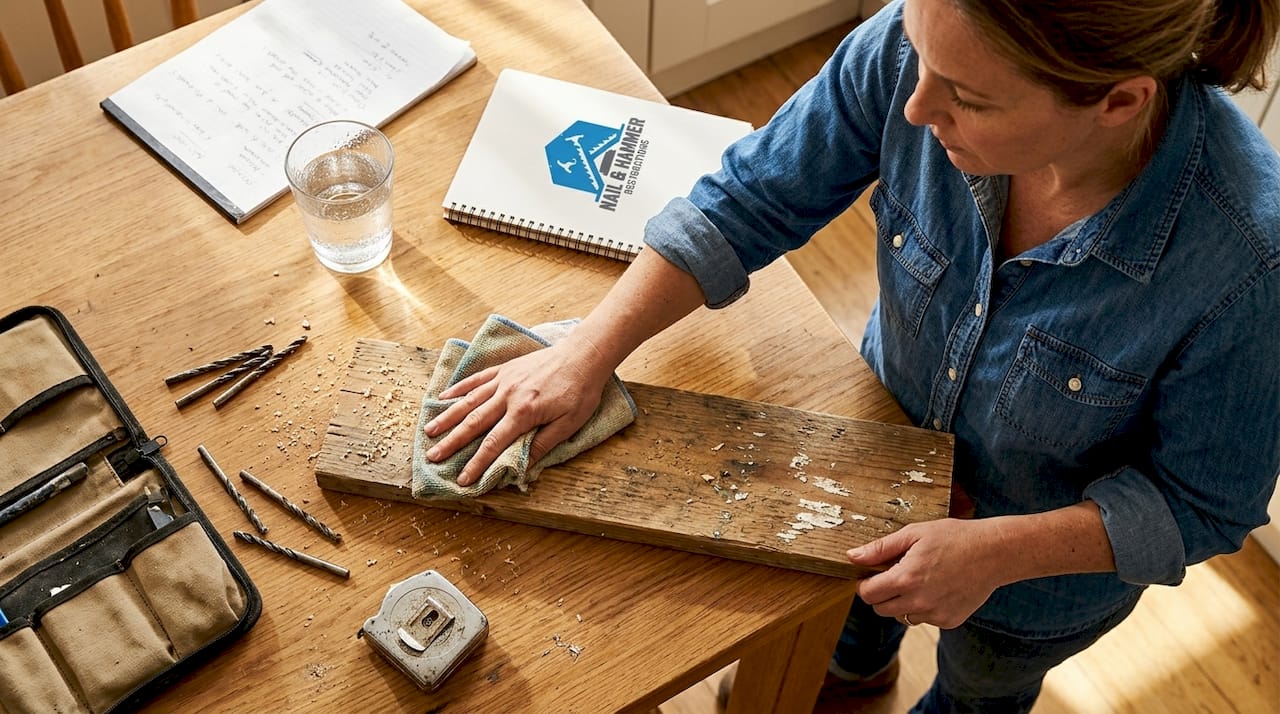
Good surface prep also includes cleaning away sawdust, grit, or old paint from the area around your fixing point. Debris under a screw head causes it to sit proud or at an angle, which reduces clamping force on the joint.
How to install screws step-by-step
Preparation complete, it’s time for hands-on installation. A methodical approach here pays off in joints that are tight, neat, and structurally sound. Correct screw installation enhances strength and durability in every build, and the process is the same whether you’re hanging a shelf or framing a deck.
Follow these steps for reliable results:
- Position your screw on the marked point and hold it steady with one hand or use a magnetic bit holder to keep it in place.
- Start slowly. Begin driving at low speed until the thread bites. This stops the bit from cam-out (slipping out of the drive recess) and scratching your material.
- Increase speed gradually once the thread is engaged, but keep the drill in line with the screw shank. Angled driving cracks timber and weakens the joint.
- Engage the clutch. Set your drill’s clutch to a torque that stops driving once the head reaches the surface. This prevents over-driving.
- Check depth and flushness. The head should sit flush with or fractionally below the surface. A screw driven too deep crushes fibres and loses holding strength.
- Inspect the joint. There should be no gap between the materials being joined. If there is, back the screw out, re-clamp the joint, and drive again.
Pro Tip: Slow and steady wins every time. High-speed driving generates heat and increases the chance of stripping the drive recess or snapping the shank, especially in hardwoods and dense sheet materials.
Statistics from the fastening industry suggest that up to 70% of fastener failures are caused by improper installation rather than a faulty product. That’s a striking number, and it puts the responsibility squarely on technique.
| Material | Key technique note | Common mistake to avoid |
|---|---|---|
| Timber | Pre-drill, check grain direction | Driving across grain without pilot hole |
| Masonry | Use correct anchor, hammer drill setting | Using standard bit in masonry |
| Plasterboard | Low torque, no pilot hole | Over-driving and crushing the board |
Troubleshooting and avoiding common screw installation mistakes
Even with the best techniques, things can go awry. Here’s how to fix and avoid the most common screw problems on site.
The most frequent issues include:
- Cam-out: The bit spins out of the drive recess, usually because of too much speed or a worn bit. Switch to a fresh bit and reduce speed.
- Stripped screw head: The drive recess is rounded out. Use a screw extractor kit or carefully grip the head with locking pliers to back it out.
- Split timber: Almost always caused by driving too close to the end of a board without a pilot hole. Pre-drill and move the fixing point at least 25mm from the end.
- Over-driven screws: The head has sunk too deep, compressing and weakening the substrate. Filling with a timber plug or moving to a new location is usually the best fix.
- Weak hold in crumbling material: Old, dry, or damaged substrates won’t hold standard screws. Use a larger diameter screw, an anchor, or bridge the weak section with a backing plate.
Knowing when to fix fastener problems versus starting fresh matters. A single stripped hole can often be rescued with a slightly larger screw or a timber plug. But if the substrate is badly damaged or the joint is misaligned, starting over produces a better result than patching.
For unusual substrates like fibre cement, engineered timber, or composite decking, consider specialty fastenings designed specifically for those materials. Generic screws in these products cause premature failure and can void manufacturer warranties.
Safety reminder: Always disconnect power before clearing jammed screws from a driver. Wear eye protection when extracting broken fasteners, as shards can fly unpredictably.
A practical perspective: what most guides don’t tell you about installing screws
Manuals cover the ideal scenario. Job sites rarely deliver one. After years of working with tradies and DIY customers across Australia, we’ve noticed that the biggest skill gaps aren’t in technique, they’re in adaptability.
Take pilot holes. Every guide says pre-drill. That’s correct for hardwoods and near board ends. But in dry softwoods like treated pine away from edges, a sharp timber screw will drive cleanly without a pilot hole and can actually create a tighter fit because the displaced fibres grip the thread. Knowing when to skip a step is just as valuable as knowing the step itself.
Off-centre pilot holes are another reality. If your hole drifts slightly, don’t panic. Drive the screw at a very slight angle to bring it back on line, or fill and re-drill. Either option works if you catch it early.
The most underrated skill is knowing when to stop. Pushing a screw into compromised material because you want to finish the job creates a hazard. A good real-world fastening workflow includes the judgement to walk away, reassess, and use the right fix rather than the convenient one.
Get the right fasteners and tools for your next project
Ready to put your new skills to work? The techniques in this guide are only as good as the products you use to execute them. At Aussie Nails and Fasteners Warehouse, we stock a wide range of quality fasteners and tools built for Australian conditions and professional demands.
For projects that also call for stapling and nailing, our N Series 32mm staples offer reliable holding power across a range of applications, while the JN70C coil nailer is a workhorse for high-volume framing and pallet work. Browse our full range online and get the right gear delivered to your door, so your next job starts on the right foot.
Frequently asked questions
What drill bit size should I use for pre-drilling screw holes?
Choose a drill bit slightly smaller than the screw’s core diameter for a snug fit. This gives the thread enough material to grip without splitting the substrate, and proper bit selection ensures the fixing holds under load.
How can I stop wood from splitting when installing screws?
Pre-drill a pilot hole and avoid driving the screw too quickly to prevent splitting. Pre-drilling prevents splitting and is especially important near board ends and in dense hardwoods.
Why do screws strip or fail to hold?
Screws strip from using the wrong bit, over-torque, or poor material condition. Choosing the right bit and using correct driving technique dramatically reduces the chance of stripping or pull-out failure.
Can I use the same screws for all building materials?
No, choose specific screw types for wood, masonry, plasterboard, or metal for best results. Matching screws to material is essential for structural integrity and long-term holding power.
Do I always need to countersink my screws?
Countersinking is only needed when you want a flush or recessed finish in your material. A flush screw head improves appearance and prevents snagging but isn’t structurally required in every application.
Recommended
- Top construction fastening tips for secure, lasting builds – Aussie Nails and Fasteners Warehouse
- How to troubleshoot fastening issues: 5 practical steps – Aussie Nails and Fasteners Warehouse
- Master the workflow for home improvement fasteners – Aussie Nails and Fasteners Warehouse
- Fastener installation guide: expert tips for Australian projects – Aussie Nails and Fasteners Warehouse