



TL;DR:
- Fixings are crucial for load transfer, anchoring, and stress distribution in building safety.
- Using correct fixings rated for specific materials, loads, and environments ensures compliance.
- Proper installation and regular inspection prevent hidden failures and extend building lifespan.
Fixings are the most underestimated components on any building site. Most people focus on the timber, concrete, or steel, assuming the small bits holding it all together will sort themselves out. They won’t. Across Australia, building failures and compliance breaches are traced back not to the primary materials, but to fixings that were wrongly specified, poorly installed, or simply ignored. Whether you’re a tradie working on a commercial project or a DIYer tackling a home renovation, understanding how fixings function in building safety is not optional. It’s the difference between a structure that lasts decades and one that fails when it matters most.
Table of Contents
- Why fixings are foundational for building safety
- Types of fixings and their compliance roles
- Selecting the right fixings for materials and loads
- Installation, inspection, and maintenance for safety
- Our perspective: What most builders overlook about fixings
- Tools and fasteners for safe, compliant builds
- Frequently asked questions
Key Takeaways
| Point | Details |
|---|---|
| Critical safety factor | Fixings are fundamental to preventing structural failures and ensuring every build is safe and compliant. |
| Match fixing to material | Choose fixings specifically designed for timber, concrete, steel, or brick to maximise safety. |
| Compliance matters | Australian Standards dictate load, durability, and corrosion needs, so check specs before purchasing. |
| Routine inspections | Regularly check and maintain fixings to protect against hidden risks and extend the building’s lifespan. |
Why fixings are foundational for building safety
Fixings do far more than hold two pieces of material together. They transfer loads between structural elements, resist lateral forces during wind and seismic events, and distribute stress across joints so no single point becomes a failure zone. Think of a fixing as the translator between materials. Without it communicating forces correctly, the whole conversation breaks down.
When fixings are undersized, corroded, or installed at the wrong angle, the consequences can be severe. Walls rack under wind pressure. Roof structures lift. Decks pull away from ledger boards. These aren’t hypothetical scenarios. They’re documented outcomes of poor fixing selection on real Australian projects.
“Incorrect fixings can lead to premature structural failure, undermining the integrity of the entire build regardless of material quality.”
The critical functions fixings perform include:
- Load transfer: Moving forces from one structural member to another without concentration
- Anchoring: Securing elements to foundations or substrates against uplift and lateral movement
- Stress distribution: Spreading applied loads across a joint to prevent localised failure
- Connection rigidity: Maintaining alignment and preventing unwanted movement over time
- Corrosion resistance: Protecting the joint from moisture and chemical attack in harsh environments
Australian building codes, particularly the National Construction Code, set minimum requirements for fixing performance in specific applications. Ignoring these requirements doesn’t just risk structural failure. It creates legal liability. Following secure fastening tips from the outset keeps your project on the right side of compliance and safety. For detailed guidance on proper technique, the installation guide covers the practical steps that make the difference between a compliant connection and a liability.
The hidden danger with fixings is that their failures are rarely visible until something goes wrong. A corroded bolt inside a wall cavity or a nail that missed the structural member looks fine from the outside. This invisibility is exactly why getting fixings right from the start matters so much.
Types of fixings and their compliance roles
Not all fixings are created equal, and using the wrong type in the wrong application is one of the most common compliance mistakes on Australian building sites. Each fixing type has a specific structural role, and substituting one for another without checking load ratings or material compatibility can create serious problems.
Here’s how the main fixing types compare in terms of their compliance strengths:
| Fixing type | Primary use | Compliance strength |
|---|---|---|
| Structural screws | Timber framing, decking | High shear and withdrawal resistance |
| Bolts and nuts | Steel connections, heavy timber | High tensile and shear load capacity |
| Masonry anchors | Concrete, brick, block | Rated pull-out and shear resistance |
| Nails (framing) | Wall frames, roof trusses | Speed of installation, shear resistance |
| Staples | Sheathing, insulation, battens | Holding thin materials to substrates |
| Chemical anchors | High-load concrete fixing | Exceptional pull-out resistance in concrete |
Australian construction projects demand fixings rated for the specific loads and materials involved, and specifying a fixing without checking its load rating against the design requirements is a compliance failure waiting to happen.
To select fixings correctly for compliance, follow these steps:
- Identify the materials being joined and the forces acting on the connection.
- Consult the relevant Australian Standard for the application (for example, AS 1720 for timber structures).
- Check the fixing manufacturer’s load tables for shear, tension, and withdrawal values.
- Confirm corrosion resistance class matches the exposure category of the site.
- Verify the fixing is installed per the manufacturer’s specification and the design engineer’s requirements.
Pro Tip: Always cross-reference your fixing selection against the relevant Australian Standards before purchasing. A fixing that looks right physically may not meet the load or corrosion requirements for your specific application. Reviewing essential fastener types for Australian construction gives you a solid reference point before you specify anything.
Corrosion resistance is a particularly critical compliance factor in Australia. Coastal and industrial environments demand fixings with higher corrosion protection ratings. Using a standard zinc-plated fixing in a marine environment will see it fail within a few years, creating hidden structural risks long before the building reaches its intended service life.
Selecting the right fixings for materials and loads
Matching fixings to the materials and loads in your project is where theory becomes practice. The wrong pairing doesn’t just reduce performance. It can create catastrophic failure modes that wouldn’t exist if the right fixing had been used from the start.

Here’s a practical guide to material and fixing combinations:
| Material | Recommended fixings | Key considerations |
|---|---|---|
| Structural timber | Ring shank nails, structural screws, bolts | Seasoned vs. unseasoned timber affects withdrawal |
| Concrete | Masonry anchors, chemical anchors, concrete screws | Embedment depth and edge distance are critical |
| Steel framing | Self-drilling screws, bolts, rivets | Drill point must match steel thickness |
| Brick and block | Masonry screws, frame anchors, resin anchors | Hollow vs. solid masonry changes anchor type |
| Composite materials | Manufacturer-specified screws | Thermal expansion requires specific fastener design |
Material-specific fasteners prevent corrosion and ensure long-term safety, which is why generic fixings from a hardware bin are rarely the right answer for structural applications.
Environmental factors add another layer of complexity. Consider these before finalising your fixing selection:
- Coastal exposure: Requires stainless steel or hot-dipped galvanised fixings rated to C4 or C5 corrosion class
- Chemical exposure: Treated timber contains compounds that corrode standard fixings rapidly; use fixings rated for H3 or H4 treated timber
- Thermal movement: Steel structures expand and contract; fixings must accommodate this movement without loosening
- Dynamic loads: Machinery, traffic, and seismic activity require fixings with rated fatigue performance
For woodworking fixings specifically, the species and moisture content of the timber affect how well a fixing holds over time. Hardwoods require pre-drilling to prevent splitting, while green timber shrinks as it dries, which can loosen fixings that were tight at installation. Checking the fastener durability guide before specifying fixings for exposed or high-moisture environments will save you significant rework costs.
Installation, inspection, and maintenance for safety
Material selection is only half the story. Applying and maintaining fixings correctly is where safety is genuinely won or lost. A perfectly specified fixing installed incorrectly performs no better than the wrong fixing. In some cases, it performs worse, because it creates a false sense of security.
Follow these steps for correct fixing installation:
- Prepare the substrate: Clean, dry, and free from contamination. Concrete must be fully cured before anchor installation.
- Use the correct drill bit and diameter: Oversize holes reduce pull-out resistance dramatically in anchors and masonry screws.
- Control installation torque: Under-torqued fixings work loose; over-torqued fixings strip threads or crack substrates.
- Maintain minimum edge and spacing distances: Too close to an edge or another fixing reduces the effective load capacity significantly.
- Inspect as you go: Check each fixing for correct seating, depth, and alignment before covering with cladding or lining.
Pro Tip: Use a calibrated torque wrench or torque-controlled driver for structural fixings. Guessing by feel is not acceptable on compliant structural connections. Consistent torque is the single biggest factor in achieving rated performance from any bolted or screwed connection.
Routine inspection and proper maintenance prevent fixing failures and extend building life, which is why a scheduled inspection programme is as important as the initial installation. For buildings in harsh environments, inspect fixings annually and after major weather events. Look for corrosion staining, movement in connections, and any signs of loosening.
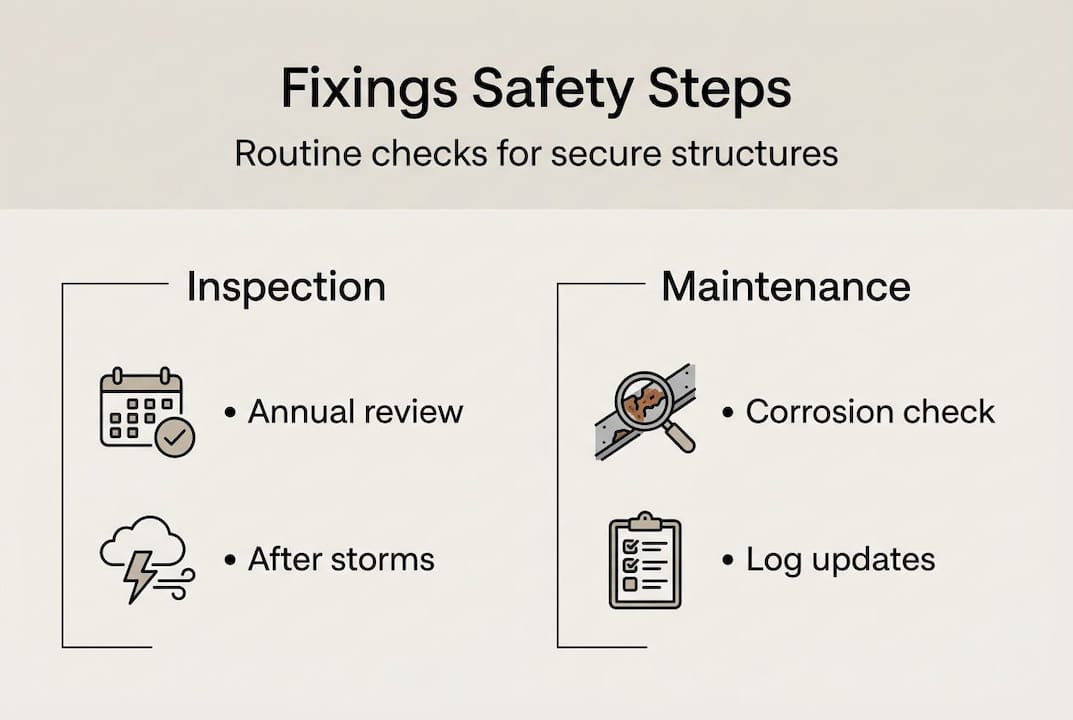
For ongoing maintenance, keep a simple log of fixing locations in concealed spaces, note the fixing type and specification, and flag any areas where access for inspection is difficult. When fixing troubleshooting steps are followed systematically, problems are caught early rather than discovered after a failure. Refer back to the original fastener installation tips whenever you’re replacing or upgrading fixings in an existing structure.
Our perspective: What most builders overlook about fixings
Here’s the uncomfortable truth: fixings are almost always blamed after a failure, but almost never checked before one. In our experience working with Australian builders and tradies, fixing selection is frequently treated as a procurement afterthought. The engineer specifies a fixing, the estimator substitutes a cheaper equivalent, and nobody checks whether the substitution maintains the required load rating or corrosion class.
The other pattern we see constantly is the assumption that a fixing that worked on the last job will work on this one. Every site has unique conditions. Soil chemistry, wind exposure, material moisture content, and load paths all vary. Applying a one-size-fits-all approach to fixings is how buildings that look perfectly fine develop serious problems five years after handover.
Meeting professional fastener standards isn’t about being overly cautious. It’s about understanding that the small parts carry the biggest consequences when they’re wrong. The builders who consistently deliver safe, compliant structures are the ones who treat fixing selection with the same rigour they apply to structural steel or concrete mix design.
Tools and fasteners for safe, compliant builds
Putting this knowledge into practice starts with sourcing fixings and tools that are genuinely rated for the job. At Aussie Nails and Fasteners Warehouse, we stock an extensive range of fixings across every category covered in this article, from structural screws and masonry anchors through to chemical anchors and corrosion-rated stainless fasteners.
Our range of building tools includes torque drivers, pneumatic nailers, and installation equipment that helps you achieve consistent, compliant results on every connection. Browse our full screw selection to find fixings rated for your specific application and environment. Whether you’re a professional tradie or a serious DIYer, we carry JITOOL, APlus, and Supco products that meet Australian Standards and perform in the field. Get the right fixings the first time and build with confidence.
Frequently asked questions
Why do fixings matter more than materials in building safety?
Fixings are responsible for holding materials together and distributing loads across connections. Without correct fixings, even the strongest materials can fail structurally regardless of their individual quality.
What are common compliance mistakes with fixings?
Using the wrong fixing type or one that isn’t rated for the specific loads and materials is the leading cause of compliance failures. Australian construction standards require fixings to be specified and verified against design loads before installation.
How often should fixings be inspected for building safety?
Fixings should be inspected annually and after major weather events. Routine inspection catches corrosion, loosening, and damage before they develop into structural safety issues.
What is the safest way to install fixings?
Following manufacturer instructions and using torque-controlled tools ensures correct tension and reduces the risk of failure. Proper installation technique is as critical as selecting the right fixing in the first place.
Recommended
- Top construction fastening tips for secure, lasting builds – Aussie Nails and Fasteners Warehouse
- Load-bearing fasteners guide for Australian construction – Aussie Nails and Fasteners Warehouse
- Complete guide to fastening staples: construction and DIY – Aussie Nails and Fasteners Warehouse
- Essential fastener types for Australian construction: 8 key picks – Aussie Nails and Fasteners Warehouse