



TL;DR:
- Choosing the correct screw material and standard is essential for durability and compliance in Australian construction.
- Structural screws are engineered for load-bearing tasks and must meet specific Australian standards.
- Using the wrong screw type or substituting non-structural fasteners for load-bearing connections can lead to failure.
Using the wrong screw can cost far more than the fastener itself. In Australian construction, an incorrectly specified screw can lead to structural failure, failed inspections, and serious liability. Whether you’re a tradie on a commercial build or a DIYer tackling a weekend deck, the choice of screw matters enormously. Australian conditions, from coastal salt air to tropical humidity and harsh UV exposure, demand fasteners that are selected with care. This guide walks you through everything you need to know: materials, standards, screw types, and the best picks for real Australian jobs.
Table of Contents
- How to choose the right screw: Materials, standards, and load
- Common screw types and their uses
- Comparing screw types: Features, strengths, and best fit
- Situational picks: Best screws for common Australian jobs
- What most guides miss about screw selection in Australia
- Get the right screws and tools for every job
- Frequently asked questions
Key Takeaways
| Point | Details |
|---|---|
| Know your standards | Australian codes like AS/NZS dictate which screw types are safe for each job. |
| Match material to environment | Always select corrosion-resistant screws for outdoor, coastal, or treated timber work. |
| Structural vs non-structural matters | Mistaking a non-structural screw for a load-bearing one can compromise safety. |
| Use the right head and thread | Choose screw types that suit your tools and materials for easier, neater installation. |
| Get expert backup | Don’t rely on guesswork—trusted suppliers offer screw types tailored for Aussie projects. |
How to choose the right screw: Materials, standards, and load
Before you reach for a screw, you need to answer three questions: What material are you fastening into? What environment will this be in? And is this a structural or non-structural connection? Get these wrong and you’re looking at corrosion, pull-out failure, or a non-compliant build that won’t pass inspection.
Australian construction doesn’t operate in a vacuum. Standards like AS3566 (for self-drilling screws) and AS1720.1 (for timber connections) govern what’s acceptable on-site. These aren’t bureaucratic box-ticking exercises. They exist because Australian conditions are genuinely tough. When it comes to screw material, your options generally fall into three categories:
- Coated steel screws: Suitable for general indoor and sheltered outdoor use; the coating resists light moisture but won’t survive coastal salt environments
- Galvanised screws: The standard choice for external timber connections; hot-dip galvanising provides a robust zinc barrier against corrosion
- Stainless steel screws (grades 304 and 316): Essential in coastal or chemically aggressive environments where corrosion risk is highest
Compliance with Australian standards for fasteners isn’t optional. Steel coated, stainless 304/316, and galvanised materials each serve distinct environmental roles, and substituting one for another can compromise both durability and compliance.
The structural vs non-structural distinction is where most costly mistakes happen. Structural vs non-structural fasteners are not interchangeable. Structural connections require high-tensile fasteners meeting AS/NZS1252, while non-structural screws handle lighter cladding, lining, and fit-out tasks. Mixing these categories up is a serious site risk.
“Never substitute a non-structural screw in a load-bearing application. The consequence isn’t just a failed inspection — it’s potential structural collapse under load.”
For a broader overview of what’s in your fastener toolkit, the guide to essential fastener types is a solid starting point.
Pro Tip: If your job involves LVL beams, timber portal frames, or any connection listed in your engineering drawings, always specify screws rated to the relevant AS/NZS structural standard. Never make a structural call based on availability alone.
Common screw types and their uses
Now that you understand what drives screw selection, here’s a practical breakdown of the most common types you’ll encounter on Australian sites and in the shed.
- Self-tapping screws: These cut their own thread into sheet metal, plastic, and thin timber without a pre-drilled pilot hole. They’re fast and versatile, but they’re not for structural timber connections. Use them for metal roofing, guttering, and light fabrication work.
- Decking screws: Designed specifically for timber and composite decking, these feature a coarse thread for grip and a countersinking head that sits flush. For outdoor use, stainless steel or hot-dip galvanised coating is critical to resist weathering and avoid unsightly staining of timber.
- Drywall screws: These have a fine thread for plasterboard and a bugle head that dimples the surface without tearing paper. Don’t use them for timber framing or wet areas. They’re black phosphate coated, which rusts quickly when exposed to moisture.
- Masonry screws: Designed for concrete and brick, these require a pre-drilled hole matching the screw diameter. They’re ideal for fixing brackets, frames, and battens to masonry without needing a plug or anchor in lighter-duty applications.
- Structural timber screws: Long, high-tensile screws used for beam connections, hold-downs, and engineering-specified joints. These replace nails and bolts in many modern timber frame applications and must meet relevant AS/NZS load ratings.
For a deeper look at the right fasteners for timber projects, the guide to woodworking fasteners covers this well. Similarly, if you’re working with steel framing or metal cladding, metal fastener solutions will help you narrow your selection.
Pro Tip: Head style matters more than most people think. A Philips head strips under high torque, while a square or Torx drive gives far better engagement with a power tool. On site, a stripped screw head costs you time and money.
Comparing screw types: Features, strengths, and best fit
Knowing the types is one thing. Choosing between them under real project conditions is another. Here’s a summary to clear the confusion.
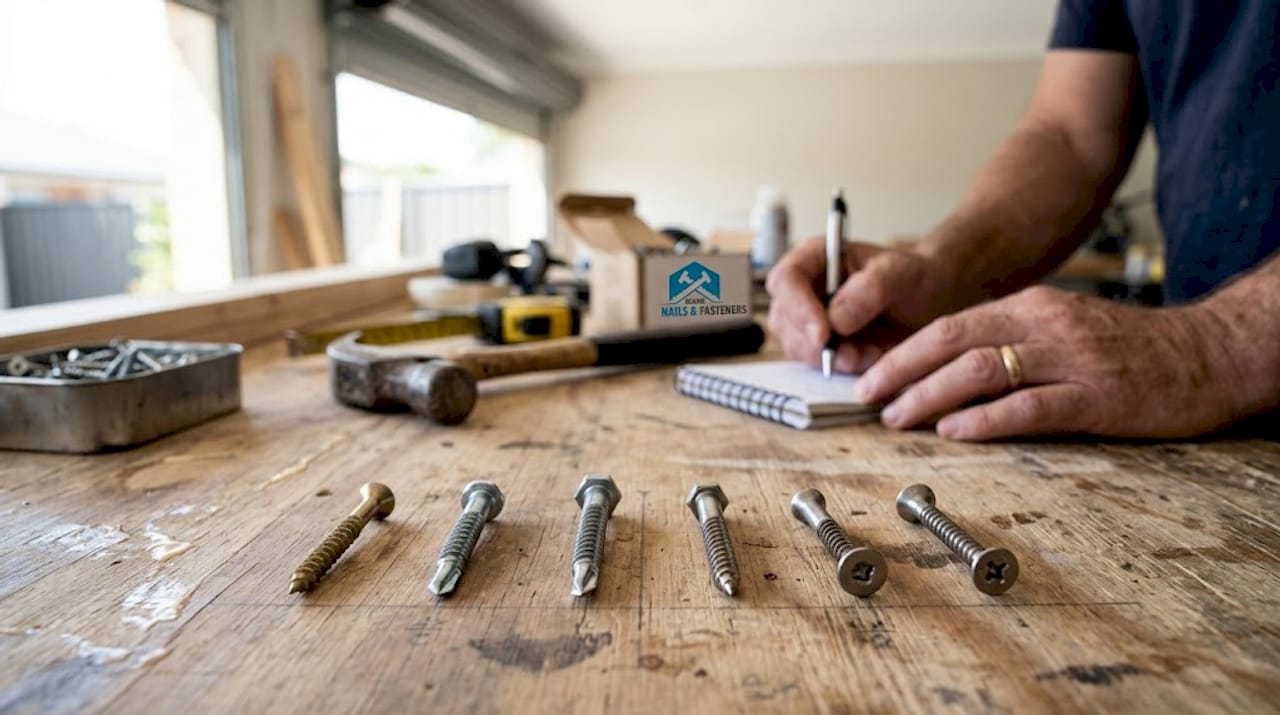
| Screw type | Head style | Thread | Material options | Best use |
|---|---|---|---|---|
| Self-tapping | Pan or hex | Fine, sharp | Coated steel | Sheet metal, light fabrication |
| Decking | Countersunk | Coarse | Galvanised, stainless | Timber and composite decking |
| Drywall | Bugle | Fine | Black phosphate | Internal plasterboard only |
| Masonry | Hex or flat | Specially formed | Zinc-plated, stainless | Concrete and brick fixing |
| Structural timber | Countersunk | Coarse, engineered | Hardened, coated | Load-bearing timber frames |
Each screw type has clear advantages and limitations:
- Self-tapping: Fast to install, no pilot hole needed, but limited pull-out strength in thick material
- Decking screws: Purpose-built for outdoor use, but must be matched to the decking species and board width
- Drywall screws: Inexpensive and readily available, but corrode rapidly in any moisture-exposed setting
- Masonry screws: Eliminate the need for plugs in lighter fixing tasks, but require accurate pilot drilling
- Structural timber screws: High strength and excellent for angled or concealed connections, but engineer-specified quantities must be strictly followed
Reviewing a heavy-duty fastener comparison can help when you’re weighing options for demanding structural work. For professionals who need to document fastener choices on-site, understanding professional fastener selection criteria is equally valuable.
“Structural screws must comply with local load-bearing standards including AS/NZS and AS5216. Substitution is never acceptable and puts both occupants and builders at serious risk.”
Situational picks: Best screws for common Australian jobs
You’ve now got a solid overview. Let’s put it into practice for the jobs most Australians tackle, whether you’re on-site or working at home.
| Job type | Recommended screw | Compliance note |
|---|---|---|
| Timber framing | Structural timber screw | AS1720.1 timber connections |
| Outdoor decking | Galvanised or stainless decking screw | AS3566 corrosion class |
| Metal roofing | Self-tapping hex head with neoprene washer | AS1562 roofing standard |
| Metal-to-metal | Self-drilling (tek) screw | AS3566 Class 3 or 4 |
| Masonry fixing | Masonry screw with correct pilot | Manufacturer load rating |
Here are the standout recommendations for each scenario:
- Timber framing: Use structural timber screws in the lengths and quantities specified by your engineer. Never substitute with general-purpose screws.
- Decking: Match your screw coating to the environment. Inland, hot-dip galvanised works well. Near the coast, stainless steel 304/316 is the right call for corrosion resistance.
- Roofing: Self-tapping hex head screws with a rubber washer seal are the industry standard. Match the colour to your roofing panel.
- Metal-to-metal: Tek screws (self-drilling) eliminate the need for pilot holes and are rated for different metal thicknesses. Class 3 or Class 4 coating for external applications.
- Masonry: Use the manufacturer-specified pilot drill diameter. Under-drilling causes screw breakage. Over-drilling eliminates holding strength.
Pro Tip: In Far North Queensland, the Northern Territory, and coastal zones across WA and NSW, always step up your corrosion protection class by one level. What holds up inland for ten years can fail in two years near the coast. Refer to our guide on construction fastening tips for climate-specific advice, or explore the range of stainless steel fasteners built for Australian conditions.
What most guides miss about screw selection in Australia
Most generic screw guides are written for a global audience, and that’s a problem. Australian conditions, combined with Australian building codes, make local experience genuinely irreplaceable. Overseas advice often recommends coatings or materials that simply aren’t rated for Australian corrosion zones or compliant with AS/NZS standards.
The most costly screw mistakes we’ve seen on real builds share a common thread: they were made by people who used what was on the shelf rather than what was specified. A box of drywall screws standing in for decking screws. A Class 1 coating used 500 metres from the ocean. Non-structural screws substituted for engineer-specified hold-downs.
Building a real sense for screw performance comes from understanding load-bearing fasteners in Australia and treating the relevant standards not as a checklist but as hard-won engineering knowledge. The tradies who avoid callbacks and the DIYers who don’t redo their decks after two wet seasons are the ones who take material specification seriously from the start. On an Australian build, the right screw isn’t the cheapest one in the rack. It’s the one rated for the job.
Get the right screws and tools for every job
Knowing your screw types is only half the job. The other half is sourcing fasteners that actually meet Australian standards and are suited to your specific application.
At Aussie Nails and Fasteners Warehouse, we stock a wide range of screws, from structural timber screws to marine-grade stainless, all selected to suit the demands of Australian construction. Our shop all fasteners range covers everything from decking and masonry through to roofing and metal framing. We also carry a broad selection of tools and accessories including JITOOL, APlus, and Supco products to make sure every fastener goes in right the first time. Need advice? Our team knows the standards and can help you spec the right product fast.
Frequently asked questions
What is the difference between structural and non-structural screws?
Structural screws are high-tensile fasteners engineered for load-bearing connections and must comply with AS/NZS standards, while non-structural screws are intended for lighter, secondary fixing tasks only.
Which screw material is best for coastal Australian environments?
Stainless steel grades 304 and 316 provide the highest corrosion resistance and are the recommended choice for coastal or chemically aggressive environments in Australia.
Are galvanised screws suitable for outdoor timber in Australia?
Yes. Galvanised screws for external timber offer strong corrosion resistance and are a reliable standard choice for outdoor applications away from coastal zones.
Can you substitute nails for screws in structural connections?
No. Structural fastener substitution is never acceptable. Always use the specified fastener type and strength class to maintain structural integrity and comply with Australian building standards.
Recommended
- Essential fastener types for Australian construction: 8 key picks – Aussie Nails and Fasteners Warehouse
- Best woodworking fastener types for Australian projects – Aussie Nails and Fasteners Warehouse
- Load-bearing fasteners guide for Australian construction – Aussie Nails and Fasteners Warehouse
- Understand industry fastener terminology for better builds – Aussie Nails and Fasteners Warehouse