



TL;DR:
- Fastener grades indicate structural strength and are marked on the bolt head.
- Using the correct grade according to Australian standards ensures safety and compliance.
- Proper verification throughout a project prevents structural failures and legal liabilities.
Two bolts sitting side by side on a workbench can look completely identical. Same size, same thread, same silver finish. But one might be rated to handle serious structural loads while the other will fail under pressure, literally. This is the reality of fastener grades, and it’s a distinction that matters enormously whether you’re framing a load-bearing wall, building a deck, or fixing outdoor joinery. Understanding what those numbers and letters stamped on your fasteners actually mean could be the difference between a build that lasts decades and one that fails an inspection or, worse, causes injury.
Table of Contents
- What are fastener grades and why do they matter?
- Deciphering fastener markings and common Australian grades
- Australian fastener standards: Why they matter and how to comply
- Choosing the right fastener grade for your project
- A better way to think about fastener grades for Aussie projects
- Find the right fasteners and expert support
- Frequently asked questions
Key Takeaways
| Point | Details |
|---|---|
| Grade impacts safety | Choosing the right fastener grade keeps your project safe, strong, and legally compliant. |
| Standards guide selection | Australian standards like AS/NZS 4291.1 and AS/NZS 1252 define which fasteners pass inspection and perform reliably. |
| Markings reveal grade | Reading grade markings helps you quickly identify the right fastener for the job. |
| Stainless isn’t always best | Stainless fasteners resist corrosion but may not be the strongest or easiest to install. |
What are fastener grades and why do they matter?
Fastener grades are numerical or alphanumerical codes that communicate the mechanical properties of a fastener, including its tensile strength, yield strength, and toughness. Think of them as a shorthand specification sheet stamped directly onto the bolt or screw head. A higher grade doesn’t always mean better for every job. It means the fastener has been manufactured to meet a specific performance standard for a specific set of conditions.
In Australian construction, matching the right grade to the right application is not just good practice. It’s a legal requirement in many contexts. The key Australian standards governing fasteners include AS/NZS 4291.1 for mechanical properties of bolts and screws, AS 1110/1111 for dimensions, and AS/NZS 1252 for high-strength structural bolting assemblies. These standards exist to ensure that fasteners used in construction perform predictably and safely under load.
When the wrong grade is used, the consequences can be serious. Structural failure is the obvious risk, but there are others: wasted materials when a fastener corrodes prematurely, costly rework when a job fails inspection, and potential liability if something goes wrong after handover. Understanding fastener quality and standards from the outset saves time, money, and headaches down the track.
Using subpar or mismatched fasteners in structural applications doesn’t just risk a failed inspection. It can compromise the safety of everyone who uses that structure.
Here are the most common scenarios where getting the grade right is non-negotiable:
- Decking and outdoor timber structures: Exposure to moisture and UV demands corrosion-resistant grades
- Load-bearing walls and structural steel connections: High tensile grades like 8.8 or 10.9 are required
- Marine and coastal environments: Salt air accelerates corrosion, making stainless or hot-dip galvanised grades essential
- Council-inspected or engineer-certified projects: Specific grade compliance is documented and verified
- Renovation work involving existing structural elements: Matching the original specification matters
Pro Tip: Always check your site-specific requirements and local council codes before purchasing fasteners. A grade that’s perfectly fine for one application may be completely inadequate for another, even on the same job site. Brushing up on common fastener terminology before you start will help you read specs and data sheets with confidence.
Deciphering fastener markings and common Australian grades
Knowing that grades matter is one thing. Being able to read them on-site is another. Fastener grades are physically marked on the head of the bolt or screw, sometimes as numbers, sometimes as lines or letters depending on the standard. A bolt marked “8.8” tells you it has a minimum tensile strength of 800 MPa and a yield-to-tensile ratio of 0.8. That’s a lot of information packed into two small digits.
Here’s a comparison of the grades you’ll encounter most often on Australian job sites, based on AS/NZS 4291.1 and AS 1110/1111:
| Grade | Min tensile strength | Typical use | Standard |
|---|---|---|---|
| 4.6 | 400 MPa | General purpose, light structural | AS/NZS 4291.1 |
| 8.8 | 800 MPa | Structural steel, heavy construction | AS/NZS 4291.1 |
| 10.9 | 1000 MPa | High-load structural, machinery | AS/NZS 4291.1 |
| A2-70 | 700 MPa | Stainless, indoor/general outdoor | AS/NZS 4291.1 |
| A4-80 | 800 MPa | Stainless, marine and coastal | AS/NZS 4291.1 |
Stainless grades like A2-70 and A4-80 are popular for outdoor and coastal work because of their corrosion resistance. However, they come with trade-offs. Stainless steel has a lower torque capacity than carbon steel equivalents and is prone to galling, which is when the threads seize during installation. Lubrication and careful torquing technique are essential when working with these grades.
Here’s how to identify a fastener’s grade on-site or from packaging:
- Check the bolt head: Look for stamped numbers or letters on the top face of the head
- Read the packaging label: Reputable suppliers include the grade, standard, and material on the box
- Cross-reference with the spec sheet: For structural work, always compare against the engineer’s specification
- Look for compliance markings: Certified fasteners will carry markings indicating the applicable Australian standard
- When in doubt, ask: A knowledgeable supplier can confirm the grade from a sample or part number
For a broader overview of what you’ll need on site, the guide to essential construction fasteners is a great starting point. And if you’re still getting your head around sizing and gauge, the fastener gauge explained resource will fill in the gaps.
Australian fastener standards: Why they matter and how to comply
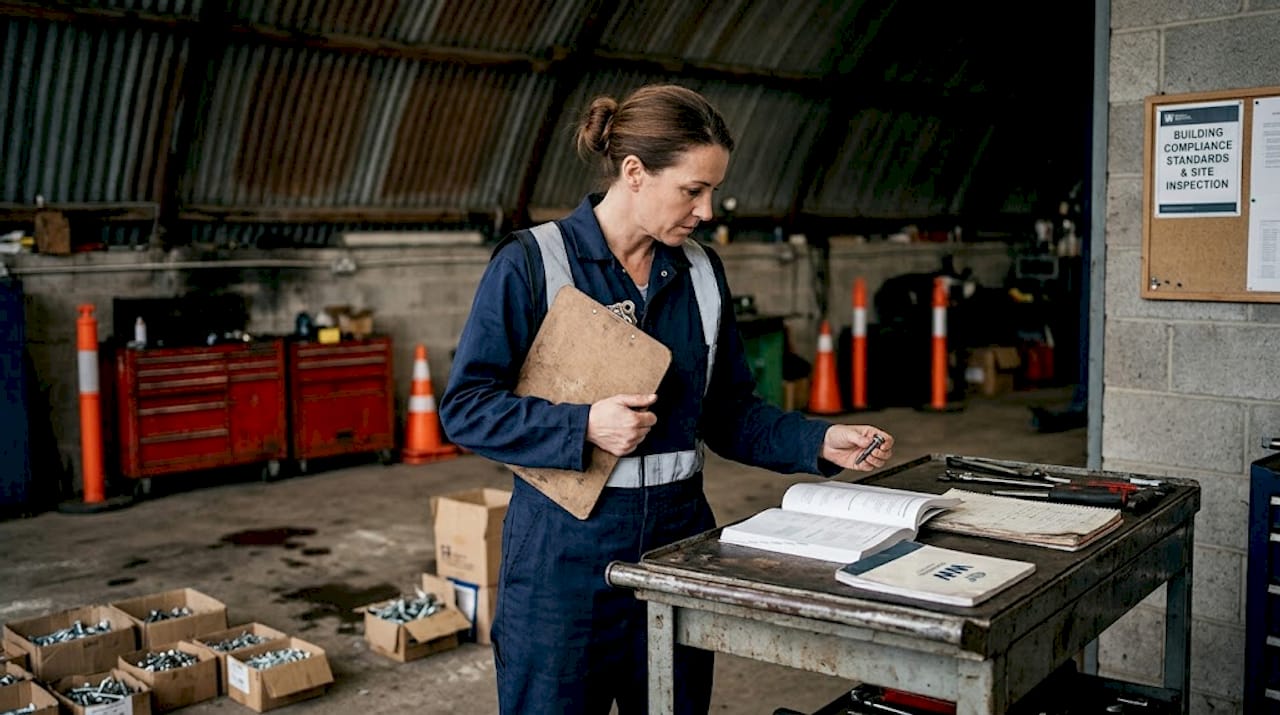
Australian standards are not just bureaucratic paperwork. They represent decades of engineering knowledge distilled into practical requirements that protect workers, homeowners, and the public. Here’s a quick breakdown of the three standards you’ll encounter most often:
| Standard | Covers | Applies to |
|---|---|---|
| AS/NZS 4291.1 | Mechanical properties | Bolts, screws, studs |
| AS 1110/1111 | Dimensions and tolerances | ISO metric bolts and nuts |
| AS/NZS 1252 | High-strength structural assemblies | Structural steel connections |
One important detail that catches many builders out: AS/NZS 1252 requires complete assemblies, meaning the bolt, nut, and washer must all be compliant and sourced as a matched set for structural use. You can’t mix and match components from different suppliers or standards and expect compliance.
For structural work, you should also be asking for documentation. Compliant fasteners come with certificates of conformance or test reports that confirm they meet the relevant standard. Look for the standard number stamped or printed on the packaging, and keep those records on file for inspections.
The risks of non-compliance are real and can be costly:
- Failed building inspections that delay handover and add rework costs
- Personal liability if a structure fails and non-compliant fasteners are identified
- Insurance complications when claims arise from non-standard materials
- Safety hazards for occupants and workers using the structure
- Legal exposure under the National Construction Code and state building regulations
For projects involving significant loads, the guide to load-bearing fasteners covers the specific requirements in detail. For long-term performance in harsh Australian conditions, the fastener durability guide is worth reading before you spec anything out.
Choosing the right fastener grade for your project
Selecting the right grade doesn’t have to be complicated if you work through it systematically. Here’s a practical checklist to guide your decision:
- Define the load: Is this structural, semi-structural, or non-structural? Higher loads demand higher grades
- Assess the environment: Indoor, outdoor, coastal, or marine? Each environment has a minimum corrosion resistance requirement
- Check the material being fastened: Timber, steel, and masonry all have different fastener requirements
- Review the specification: If there’s an engineer’s spec or council requirement, that overrides everything else
- Match the assembly: For structural work, ensure bolt, nut, and washer are all from the same compliant set
- Consider the finish: Hot-dip galvanised, zinc-plated, and stainless each suit different conditions
The stainless steel question comes up constantly on Aussie job sites. Stainless A2-70 is roughly equivalent to an 8.8 carbon steel bolt in terms of tensile strength, but A4-80 is the right choice for marine or fully exposed coastal applications. The trade-off is that both grades have a higher galling risk and lower torque capacity, so installation technique matters more than it does with carbon steel.
From a cost perspective, it’s almost always worth specifying 8.8 over 4.6 for anything structural. The price difference is marginal, but the performance difference is significant. Spending a little more upfront on the right grade avoids expensive remediation later.
Pro Tip: For any project that will be inspected by council or certified by an engineer, consult that engineer before purchasing fasteners. They can specify the exact grade, standard, and assembly requirements, which saves you from costly substitutions mid-build.
Common pitfalls to avoid include misreading grade markings (a “4.8” is not the same as a “4.6”), ignoring the environment when specifying grade, and assuming that a bigger bolt compensates for a lower grade. For specific application guidance, the resources on metal fastening solutions, stainless steel fasteners, and woodworking fastener picks are all worth bookmarking.
A better way to think about fastener grades for Aussie projects
Here’s something we’ve observed over many years in the fastening industry: most mistakes with fastener grades don’t come from ignorance. They come from overconfidence. The “near enough is good enough” mindset is surprisingly common, even among experienced tradespeople. A bolt looks right, feels right, and fits the hole, so it gets used. The grade marking gets a passing glance at best.
The real lesson is that grade matching is not a one-time decision made at the hardware store. It’s a habit of verification that runs through every stage of a project, from spec review to installation to sign-off. We’ve seen jobs where rechecking the standard and confirming that the bolt, nut, and washer were all from the same compliant assembly prevented a significant structural issue from being locked into a building permanently.
Grade compliance also matters for insurance and long-term liability. If something goes wrong years down the track and the fasteners are found to be non-compliant, the consequences fall on whoever specified or installed them. Understanding the essential fastener qualities that define a reliable product is the foundation of building work you can stand behind. Raise the bar on every project, and the grades will take care of themselves.
Find the right fasteners and expert support
At Aussie Nails and Fasteners Warehouse, we stock a wide range of fasteners designed to meet Australian standards for both professional and DIY applications. Whether you need structural bolts, corrosion-resistant screws, or specialty fastenings for outdoor builds, we have you covered.
Our team understands the compliance requirements that matter on Australian job sites, and we’re here to help you select the right grade for your specific project. From our pallet coil nailer for high-volume nailing to our electro galvanised staples for reliable fixing, every product in our range is chosen for quality and performance. Browse the full catalogue at Aussie Nails and Fasteners Warehouse and get your next project started with confidence.
Frequently asked questions
What do the numbers on a bolt mean?
The numbers indicate the grade, showing the bolt’s tensile strength and yield ratio. For example, AS/NZS 4291.1 governs these markings, so an 8.8 bolt has a minimum tensile strength of 800 MPa with a yield ratio of 0.8.
Is stainless steel always the best choice for fasteners?
Not always. Stainless steel offers excellent corrosion resistance but has lower torque capacity and a higher galling risk. For marine or fully exposed coastal applications, A4-80 for marine use is the appropriate choice.
How can I check if my fasteners are compliant with Australian standards?
Look for grade markings stamped on the bolt head and the standard number on the packaging. For structural use, AS/NZS 1252 requires a complete compliant assembly, so ask your supplier for a certificate of conformance.
What is the main risk of using the wrong fastener grade?
Using the wrong grade can lead to structural failure, safety hazards, and failed building inspections. Australian standards including AS/NZS 4291.1 and AS/NZS 1252 exist specifically to prevent these outcomes on construction projects.
Recommended
- Essential fastener types for Australian construction: 8 key picks – Aussie Nails and Fasteners Warehouse
- Understand industry fastener terminology for better builds – Aussie Nails and Fasteners Warehouse
- Understand fastener durability: Build stronger Australian projects – Aussie Nails and Fasteners Warehouse
- Load-bearing fasteners guide for Australian construction – Aussie Nails and Fasteners Warehouse